

As a supplier of Water Cool Condenser Coils, I understand the critical role these components play in various industrial and commercial applications. The efficiency of a water cool condenser coil directly impacts the performance and energy consumption of the entire cooling system. In this blog, I will share some practical strategies to enhance the efficiency of water cool condenser coils.
1. Regular Maintenance and Cleaning
One of the most fundamental steps to improve the efficiency of a water cool condenser coil is regular maintenance and cleaning. Over time, dirt, dust, debris, and scale can accumulate on the surface of the coil. This buildup acts as an insulator, reducing the heat transfer efficiency between the refrigerant and the cooling water.
To prevent this, a scheduled cleaning routine should be established. Depending on the operating environment, this could range from monthly to quarterly cleanings. For light - duty applications in relatively clean environments, a quarterly cleaning may suffice. However, in industrial settings with high levels of dust or contaminants, monthly cleanings might be necessary.
When cleaning the coil, it is important to use the appropriate cleaning agents. Mild detergents can be used for general dirt and dust removal. For more stubborn scale deposits, chemical descaling agents may be required. But it is crucial to follow the manufacturer's instructions when using these chemicals to avoid damaging the coil.
2. Optimize Water Flow
Proper water flow is essential for the efficient operation of a water cool condenser coil. Insufficient water flow can lead to poor heat transfer, while excessive water flow can increase energy consumption without a proportional increase in efficiency.
To optimize water flow, it is necessary to ensure that the water pump is properly sized for the system. The pump should be able to deliver the required amount of water at the appropriate pressure. Flow meters can be installed to monitor the water flow rate and make adjustments as needed.
In addition, the water distribution within the coil should be uniform. Uneven water flow can cause hot spots on the coil, reducing its overall efficiency. This can be achieved by using proper water distribution headers and ensuring that the pipes are free from blockages.
3. Improve Refrigerant Charge
The refrigerant charge in the condenser coil also has a significant impact on its efficiency. An under - charged system will not be able to transfer heat effectively, while an over - charged system can lead to increased pressure and energy consumption.
Regular refrigerant leak checks should be conducted to ensure that the system is properly charged. If a leak is detected, it should be repaired immediately, and the refrigerant should be replenished to the correct level. It is recommended to use refrigerant gauges to accurately measure the refrigerant pressure and temperature and determine the appropriate charge.
4. Upgrade to High - Efficiency Materials
Using high - efficiency materials in the construction of the water cool condenser coil can significantly improve its performance. For example, coils made of materials with high thermal conductivity, such as copper or aluminum alloys, can transfer heat more effectively than those made of lower - conductivity materials.
Advanced surface treatments can also enhance the heat transfer performance of the coil. For instance, micro - finned tubes can increase the surface area available for heat transfer, improving the overall efficiency of the coil.
5. Implement Smart Controls
The use of smart controls can optimize the operation of the water cool condenser coil. These controls can adjust the water flow, refrigerant charge, and fan speed based on the actual operating conditions.
For example, variable frequency drives (VFDs) can be installed on the water pump and fans. VFDs allow the speed of the motor to be adjusted according to the load, reducing energy consumption during periods of low demand. Temperature and pressure sensors can be used to monitor the system parameters, and the control system can make real - time adjustments to ensure optimal performance.
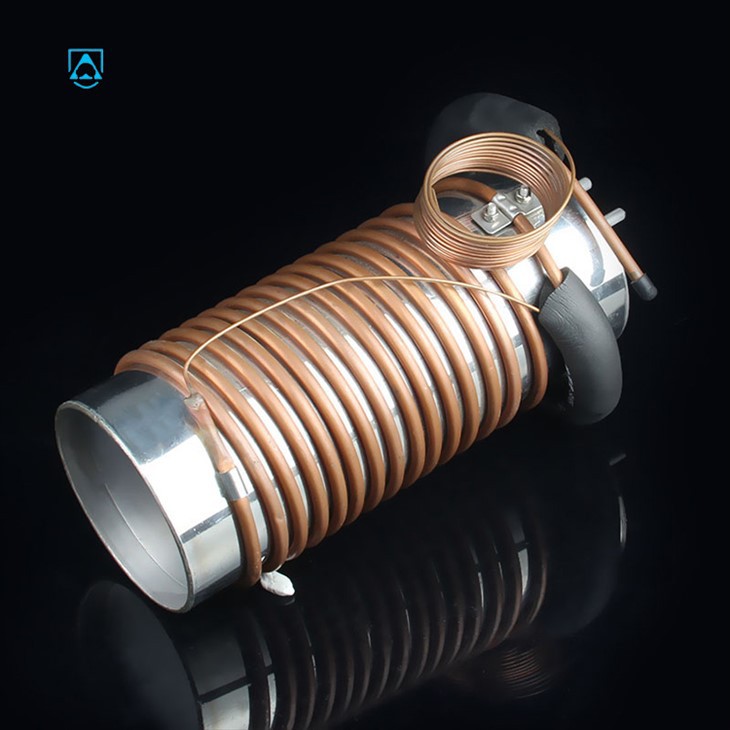

6. Consider Heat Exchanger Upgrades
In some cases, upgrading to more advanced heat exchangers can improve the efficiency of the water cool condenser coil system. For example, a Double Pipe Heat Exchanger for Salt Solution Dehumidifier can provide better heat transfer performance in certain applications. These heat exchangers are designed to handle specific fluids and operating conditions, and they can be a great addition to a water cool condenser coil system.
Another option is the Flat Plate Heat Exchanger. Flat plate heat exchangers have a large surface area for heat transfer and can be very efficient in transferring heat between two fluids. They are also relatively compact, which can save space in the installation.
7. Evaluate the System Design
The overall design of the water cool condenser coil system can have a major impact on its efficiency. A well - designed system will take into account factors such as the layout of the pipes, the location of the coil, and the interaction with other components in the system.
For example, the coil should be installed in a location where it can receive adequate air circulation. If the coil is installed in a confined space, the heat dissipation will be limited, reducing its efficiency. The pipe layout should also be designed to minimize pressure drops and ensure smooth water flow.
8. Training and Education
Finally, providing proper training and education to the operators and maintenance staff is crucial for the efficient operation of the water cool condenser coil. Operators should be trained to understand the system's operation, monitor the key parameters, and perform basic maintenance tasks.
Maintenance staff should be trained to conduct more in - depth inspections, repairs, and upgrades. They should be familiar with the latest technologies and best practices in water cool condenser coil maintenance and optimization.
In conclusion, improving the efficiency of a water cool condenser coil requires a comprehensive approach that includes regular maintenance, optimization of water flow and refrigerant charge, use of high - efficiency materials, implementation of smart controls, consideration of heat exchanger upgrades, evaluation of the system design, and proper training and education.
If you are interested in learning more about our Water Cool Condenser Coils or have any questions regarding their efficiency improvement, please feel free to contact us for a detailed discussion and potential procurement. We are committed to providing high - quality products and professional solutions to meet your specific needs.
References
- ASHRAE Handbook of Refrigeration. American Society of Heating, Refrigerating and Air - Conditioning Engineers.
- Incropera, F. P., & DeWitt, D. P. (2002). Fundamentals of Heat and Mass Transfer. John Wiley & Sons.
- Cengel, Y. A., & Boles, M. A. (2015). Thermodynamics: An Engineering Approach. McGraw - Hill Education.