

Hey there! I'm an industry insider from a heat exchanger HVAC supplier, and today I'm super stoked to break down how heat exchangers work in water - based HVAC systems. Let's dive right in!
First off, let's understand what a water - based HVAC system is. These systems use water as a medium to transfer heat. They're pretty popular because water has some awesome properties. It can absorb and release a large amount of heat with relatively small changes in temperature. This makes it a great choice for heating and cooling large spaces efficiently.
Now, the star of the show - the heat exchanger. In a water - based HVAC system, the heat exchanger is like the heart. Its main job is to transfer heat between two fluids without them actually mixing. In most cases, one fluid is water, and the other could be refrigerant, air, or another water stream at a different temperature.
There are different types of heat exchangers used in water - based HVAC systems, and each has its own unique way of getting the job done.
Plate Heat Exchangers
Plate heat exchangers are a common sight in these systems. They're made up of a series of thin, corrugated plates stacked together. The fluids flow through alternating channels between the plates. The corrugations on the plates do a couple of really important things. First, they increase the surface area for heat transfer. The more surface area there is, the more heat can be transferred between the two fluids. Second, they create turbulence in the fluid flow. Turbulence helps to break up the boundary layer of the fluid near the plate surface, which in turn enhances heat transfer.
For example, in a chilled water system, the cold water from the chiller can flow through one set of channels in the plate heat exchanger, while the warm water from the building's HVAC system flows through the adjacent channels. As the two fluids pass each other, heat is transferred from the warm water to the cold water. This cools down the warm water, which can then be circulated back into the building to absorb more heat. If you're interested in this type of heat exchanger, check out our Cold Plate Heat Exchanger.
Coaxial Heat Exchangers
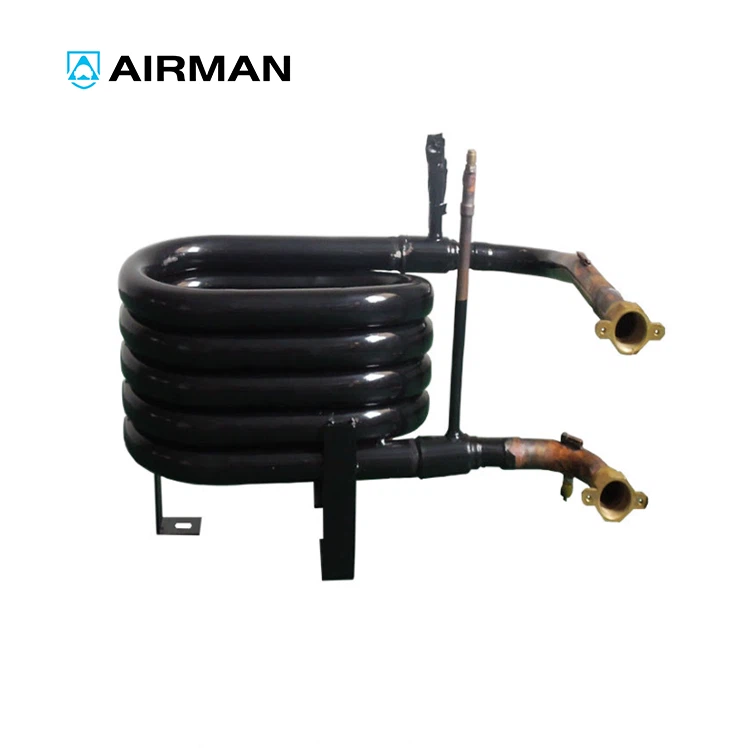
Coaxial heat exchangers consist of two or more concentric tubes. One fluid flows through the inner tube, and the other flows through the annular space between the tubes. These heat exchangers are great for applications where space is limited because they have a compact design.
Let's say you have a water - cooled condenser in a marine HVAC system. A Coaxial Condenser For Marine can be used to transfer heat from the refrigerant to the seawater. The refrigerant flows through the inner tube, and the seawater flows through the outer annular space. As the hot refrigerant releases heat to the cooler seawater, it condenses back into a liquid state.
Coaxial heat exchangers made of copper, like our Coaxial Heat Exchanger Copper, are also quite popular. Copper is an excellent conductor of heat, which means it can transfer heat quickly and efficiently. This makes it ideal for applications where high - performance heat transfer is required.
Shell and Tube Heat Exchangers
Shell and tube heat exchangers are another option. They have a large shell that contains a bundle of tubes. One fluid flows through the tubes, and the other flows around the tubes inside the shell. These heat exchangers are often used in large - scale industrial and commercial HVAC applications because they can handle high flow rates and large temperature differences.
The tubes in a shell and tube heat exchanger can be arranged in different patterns, such as parallel or cross - flow. The choice of tube arrangement depends on the specific requirements of the HVAC system. For example, in a parallel - flow arrangement, the two fluids enter the heat exchanger at the same end and flow in the same direction. This can be useful when you want to achieve a high degree of heat transfer efficiency.
How Heat Transfer Works
Now, let's talk about the science behind heat transfer in these heat exchangers. Heat transfer occurs through three main mechanisms: conduction, convection, and radiation. In a heat exchanger, conduction and convection are the primary players.
Conduction is the transfer of heat through a solid material. In a plate heat exchanger, for example, heat is conducted through the thin metal plates from the warmer fluid to the cooler fluid. The rate of conduction depends on the thermal conductivity of the material, the thickness of the material, and the temperature difference across the material.
Convection is the transfer of heat by the movement of a fluid. When a fluid is heated, it becomes less dense and rises. This creates a flow of fluid that helps to transfer heat. In a heat exchanger, the fluids are in motion, and this convective flow enhances the heat transfer process.
The overall heat transfer rate in a heat exchanger is determined by the heat transfer coefficient, the surface area available for heat transfer, and the temperature difference between the two fluids. By optimizing these factors, we can design heat exchangers that are highly efficient.
Applications in HVAC Systems
Heat exchangers play a crucial role in various parts of a water - based HVAC system.

In a heating system, a heat exchanger can be used to transfer heat from a boiler to the water that is circulated through the building's radiators or under - floor heating system. The hot water from the boiler enters the heat exchanger, and as it passes through, it heats up the cooler water that is going to be distributed throughout the building.
In a cooling system, as mentioned earlier, heat exchangers are used to transfer heat from the building's warm air or water to a cooling medium, such as chilled water or refrigerant. This helps to maintain a comfortable indoor temperature.
Benefits of Using Heat Exchangers in Water - Based HVAC Systems
There are several benefits to using heat exchangers in water - based HVAC systems.
First, they improve energy efficiency. By transferring heat between fluids, we can reuse the heat that would otherwise be wasted. For example, in a heat recovery system, a heat exchanger can be used to transfer heat from the exhaust air to the incoming fresh air. This reduces the amount of energy needed to heat or cool the fresh air.
Second, heat exchangers can help to reduce the environmental impact of HVAC systems. By using water as a heat transfer medium instead of more harmful refrigerants, we can minimize the release of greenhouse gases.
Third, they provide better control over the temperature and humidity in a building. By precisely controlling the heat transfer process, we can ensure that the indoor environment is comfortable and healthy.
Wrapping Up and Reaching Out
Well, that's a pretty comprehensive look at how heat exchangers work in water - based HVAC systems. As a heat exchanger HVAC supplier, we're constantly working on improving our products to meet the ever - changing needs of the industry. Whether you're looking for a high - performance plate heat exchanger, a compact coaxial heat exchanger, or a large - scale shell and tube heat exchanger, we've got you covered.
If you're in the market for a heat exchanger for your water - based HVAC system, or if you have any questions about our products, don't hesitate to reach out. We'd love to have a chat with you and help you find the perfect solution for your needs.
References
- Incropera, F. P., DeWitt, D. P., Bergman, T. L., & Lavine, A. S. (2007). Fundamentals of Heat and Mass Transfer. John Wiley & Sons.
- ASHRAE Handbook - HVAC Systems and Equipment. (2015). American Society of Heating, Refrigerating and Air - Conditioning Engineers.